
Matrescence: The Transformation of Becoming a Mother
There's a word for that!
Matrescence: the developmental transition into and through motherhood.
At the outset, I want to name that when I refer to motherhood, I'm referring to a role. That role can be held separately from gender and birthing pathways.
What feels so powerful about the word, matrescence, is that it gives language to a transformative experience many people go through, yet struggle to explain.
Anthropologist Dana Raphael introduced the term in the 1970s ("doula" is also one of her words), and reproductive psychologist Dr. Aurelie Athan has helped bring renewed attention to the concept in recent years.
Matrescence reshapes identity, relationships, emotions, needs, priorities, and ways of moving through the world. It can begin long before someone else recognizes it.
The path into matrescence isn't the same for everyone.
It may unfold gradually.
It may arrive unexpectedly.
It may involve pregnancy, caregiving, adoption, abortion, loss, impossible decisions, or dreams that never fully arrive yet still change someone's story forever.
Some carry a child in their arms.
Some in their hearts.
Some in memory.
No matter the path, these experiences often leave people changed.
Never entirely the same person they were before.
Although there's tremendous attention given to child development, there's far less acknowledgment that mothers are developing, too.
Matrescence isn't linear, easily recognized, or openly spoken about.
Motherhood can bring love, awe, meaning, tenderness, grief, exhaustion, and loneliness, sometimes all at once.
Yet dominant Western culture often expects mothers to appear grateful, capable, nurturing, emotionally steady, and fulfilled through every stage.
Not because that's reality.
Because that's the expectation.
So many mothers find themselves wondering:
How come nobody told me about this part?
That question makes sense.
Motherhood isn't always or only beautiful. It's also demanding, requiring extraordinary amounts of emotional, physical, relational, and psychological energy.
If support appears, it's usually in the early days.
Soon, much of that support disappears.
Meanwhile, motherhood keeps changing.
Infancy.
Toddlerhood.
School age.
Adolescence.
Launching.
Adult children.
Being needed differently.
Being needed less.
Letting go.
Grief.
Beginning again.
The becoming never really ends.
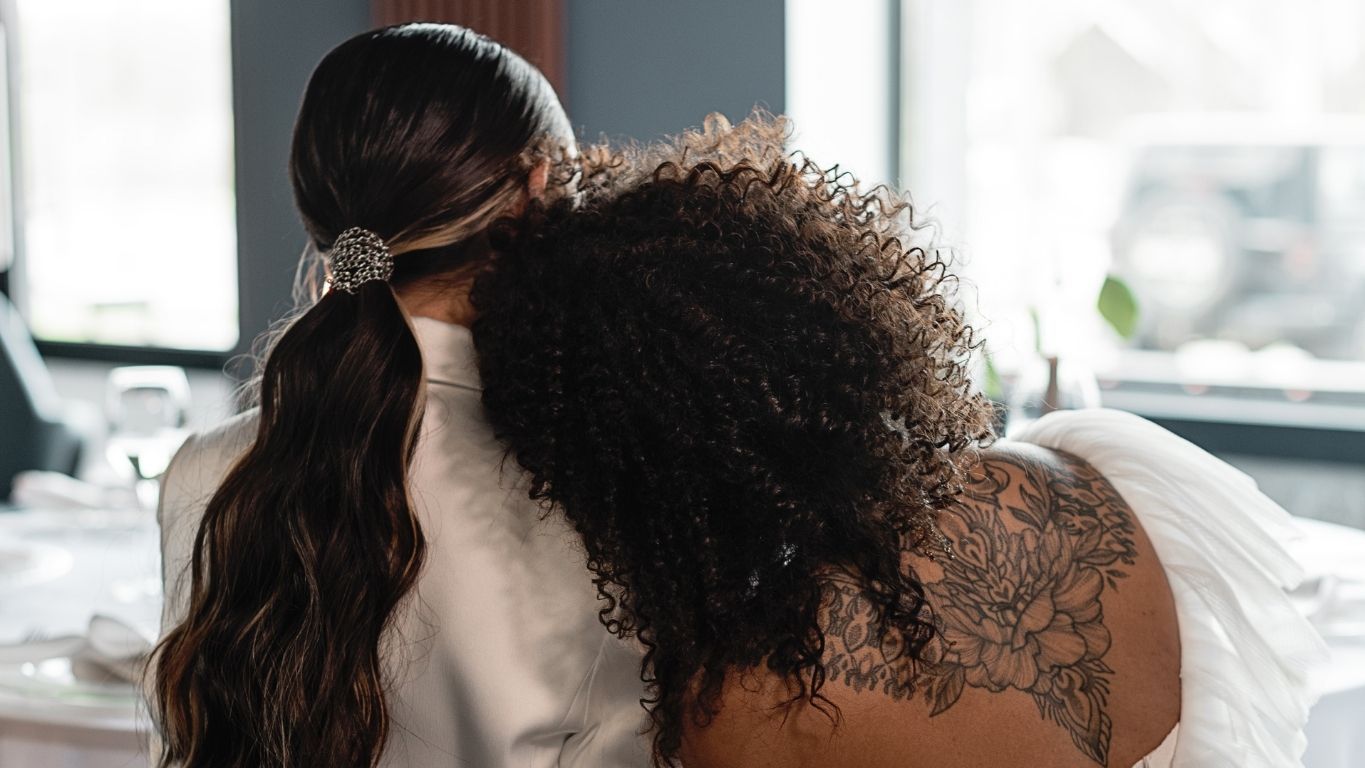
Jabina Coleman, LCSW, IBCLC, whose work centers Black maternal mental health and reproductive psychotherapy, asks a profound question that speaks to the need for support:
“Everyone wants to hold the baby.
Who will hold the mother?”
Psychiatrist Dr. Alexandra Sacks says in her TED Talk:
“When a baby is born, so is a mother, each unsteady in their own way. Matrescence is profound, but it’s also hard, and that’s what makes it human.”
Maybe that’s part of what mothers need most:
Not pressure to become perfect.
Support while becoming someone new, again and again.
Because matrescence isn't a single transition.
It's part of a continual process of becoming.